
Develop a Landscape-Wide Biodiversity Dataset
Challenge
Despite its renown, Bentarum is largely data deficient, particularly outside of the two national parks. This lack of biodiversity data impedes appropriate land-use planning.
Solution
Conduct vegetation and vertebrate surveys, complemented by camera trap surveys and species-specific occupancy surveys, to create a species inventory and identify high conservation value areas.
Progress
Vertebrate surveys have allowed us to identify that the Critically Endangered tricolour langur (Presbytis chrysomelas cruciger) live at densities of 1.481 groups/km2 in peat swamp forests, their main habitat, and 0.56 groups/km2 in mixed agriculture habitat. Bentarum has an estimated population 7,545 individuals, potentially the largest remaining population. This data has led to the development of targeted strategies to reduce hunting of the tricolour langur and protection of langur habitat, focused on Sungai Ajung.
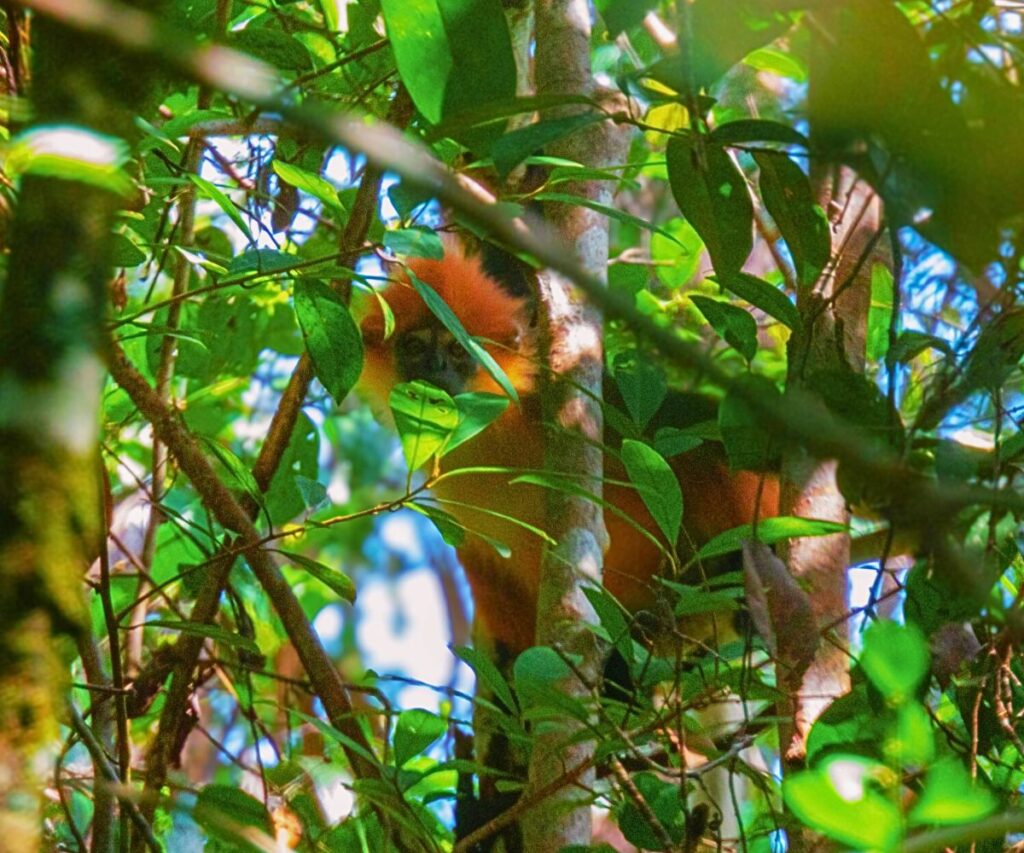
Tricolour langur (Presbytis c. cruciger) in its natural habitat
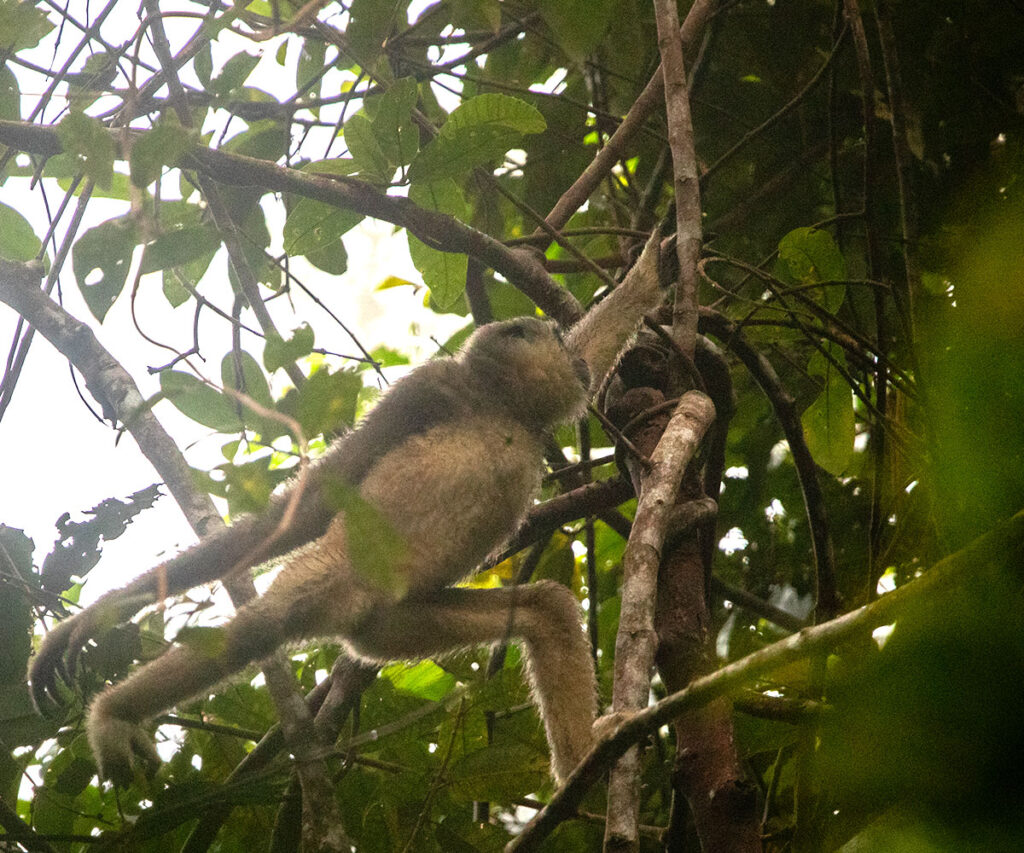
Endangered Abbott’s gibbon (Hylobates abbotti) among the canopy
Triangulation surveys have confirmed that gibbons seen in Bentarum’s north are the Endangered abbott’s gibbon (Hylobates abbotti). They are living at a density range of 0.41-1.01 groups/km2, which are low but viable. This density results in an estimated population of 4,657 groups. This data has led to the development of targeted strategies to reduce hunting of the Abbott’s gibbon and protection of gibbon habitat, focused on the villages of Sungai Uluk Palin and Banua Tanga.
We have captured images of four of Kalimantan’s five small cat species, including the rarely captured Endangered flat-headed cat (Prionailurus planiceps). This has led to the development of the West Kalimantan Small Cat Working Group, which Sangga Bumi facilitates with West Kalimantan’s Natural Resources Conservation Centre (Balai Konservasi Sumber Daya Alam). Bentarum has been identified as a high priority area for small cat conservation.
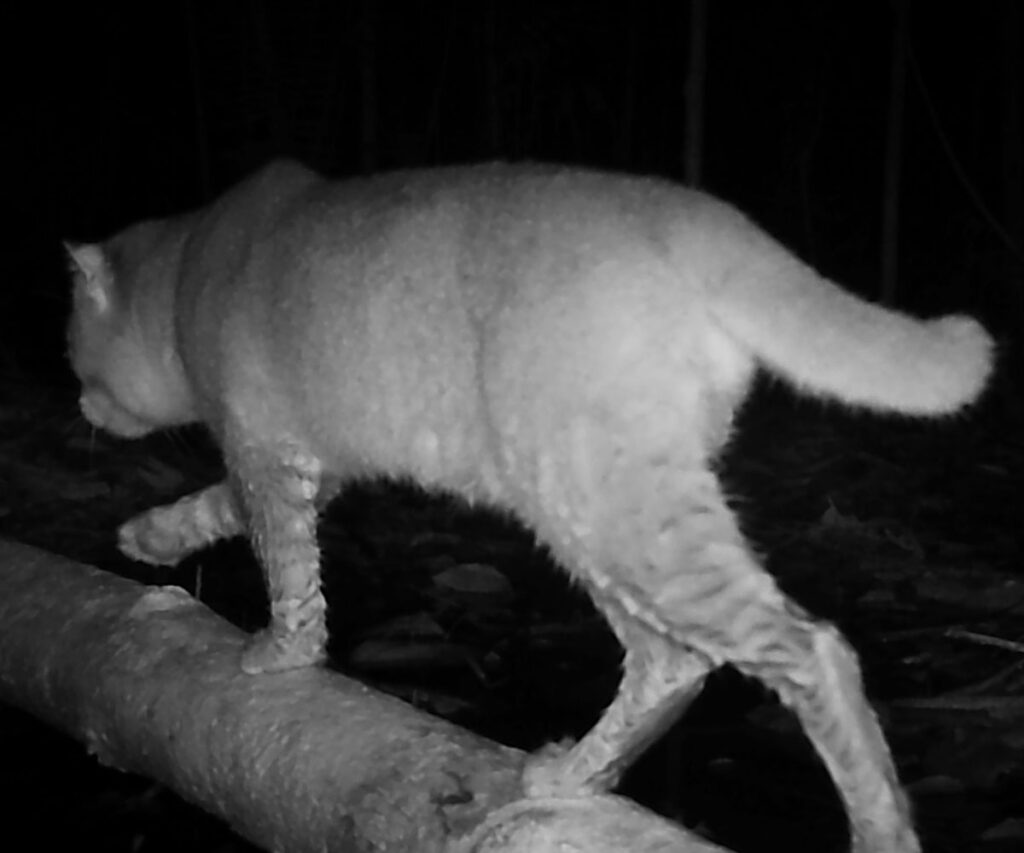
Flat-headed cat (Prionailurus planiceps) captured by camera trap